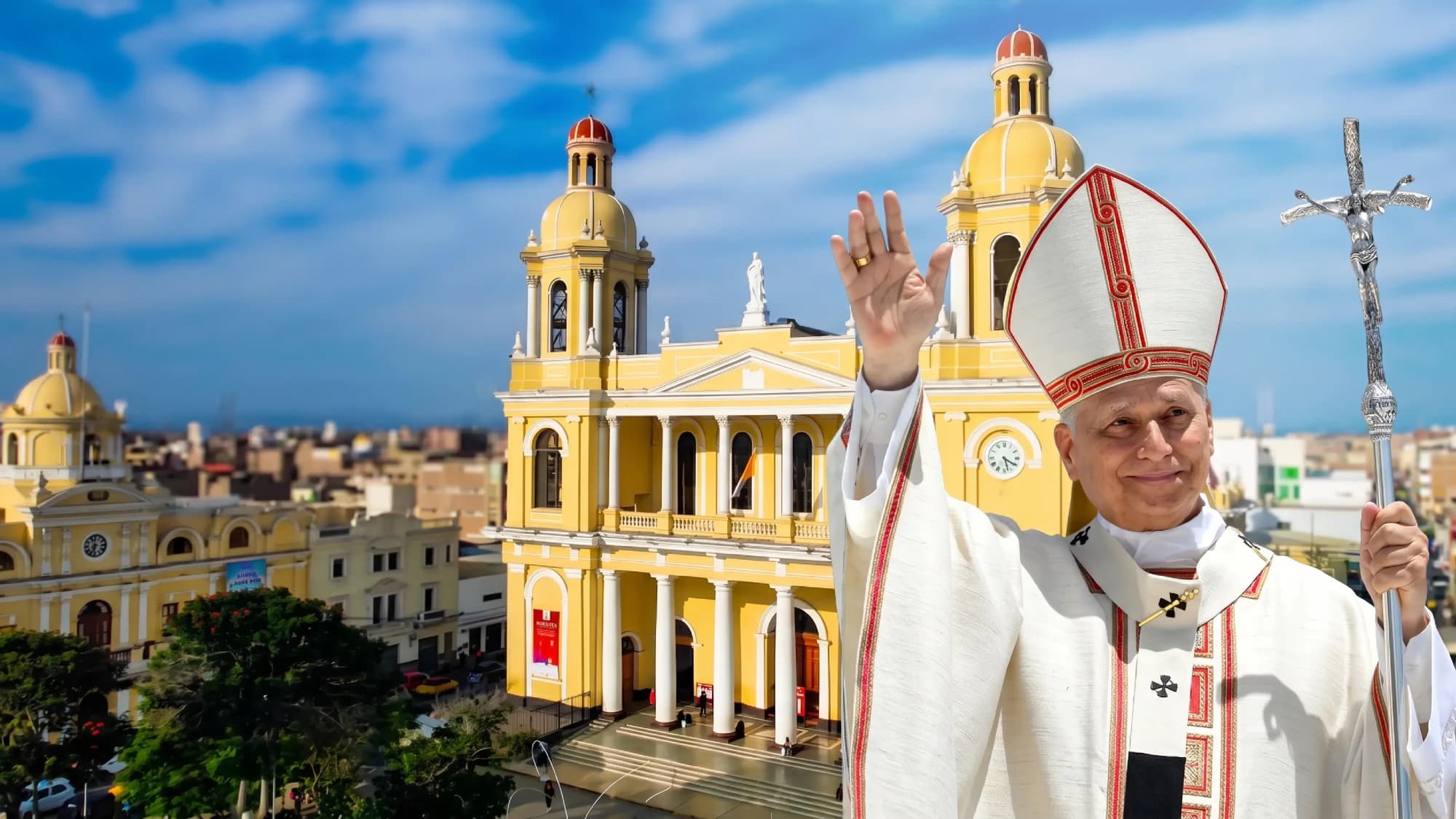
The complete guide to the Pope's Route in Chiclayo
Chiclayo is far more than the gateway to Lambayeque: it is the city where Pope Leo XIV served as Robert Francis Prevost. This is the guide to the churches, sanctuaries and towns that make up the Pope's Route, with real distances and timings that actually hold up.
Editorial Zentra
Zentra team
Share
Chiclayo is much more than a gateway to the history and culture of Lambayeque. It is also a city deeply tied to the pastoral history of the current Pope Leo XIV, who during his years as Robert Francis Prevost carried out significant religious work in this region.
Today, walking the Pope's Route in Chiclayo means visiting churches, sanctuaries and other places that are part of that history, while discovering the heritage, traditions and identity of the region.
If you are planning a trip to Chiclayo and want to follow this route, here is everything you need to organize your visit.
What is the Pope Leo XIV Route?
The Pope Leo XIV Route is a tourism, religious and cultural circuit bringing together places linked to Robert Francis Prevost's pastoral work in Lambayeque.
The official initiative of the Regional Government of Lambayeque aims to bring together faith, history and cultural heritage, connecting churches, sanctuaries, museums and other regional attractions. The route currently covers four circuits and more than 25 religious and cultural destinations.
For anyone visiting Chiclayo, this route is a different way to get to know the city: not only through its tourist attractions, but through the communities, churches and spaces that are part of its recent history.
Why the Pope's Route matters to Chiclayo
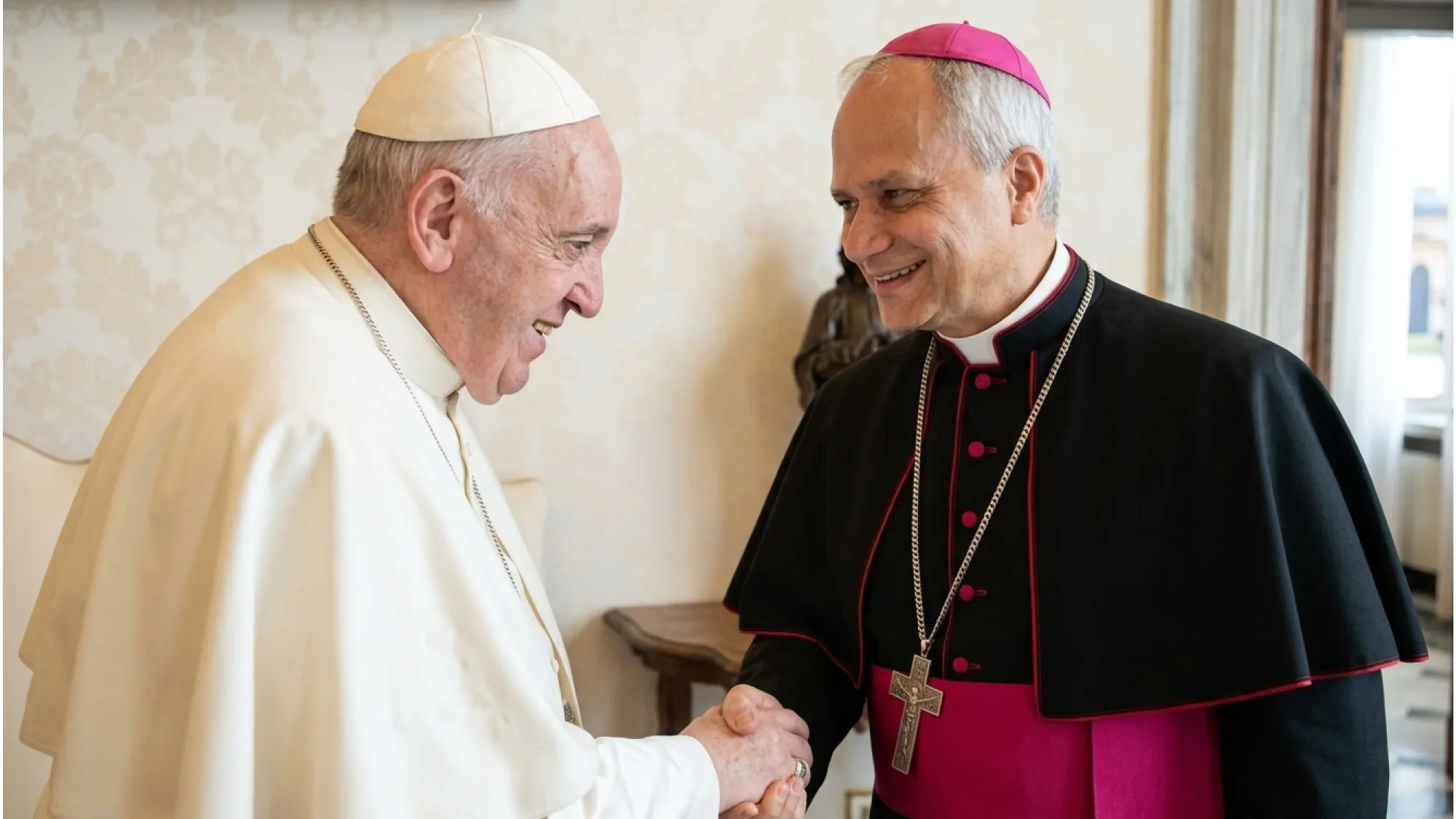
The relationship between Pope Leo XIV and Chiclayo is especially meaningful. Before arriving at the Vatican, Robert Prevost served as bishop of this diocese and worked closely with the communities of Lambayeque.
That is why many of the places on the route are not merely tourist attractions: they are spaces that help explain part of his pastoral journey and the bond he built with local people.
The Diocese of Chiclayo itself has said that during his November 2026 visit to Peru the Pope will return to places of particular significance for the local Church: Chiclayo Cathedral, the Sanctuary of Our Lady of Peace, USAT, Santa Cruz, Zaña and the flats of the Reque Industrial Park.
Places you can visit on the Pope's Route
1. Santa María Cathedral of Chiclayo
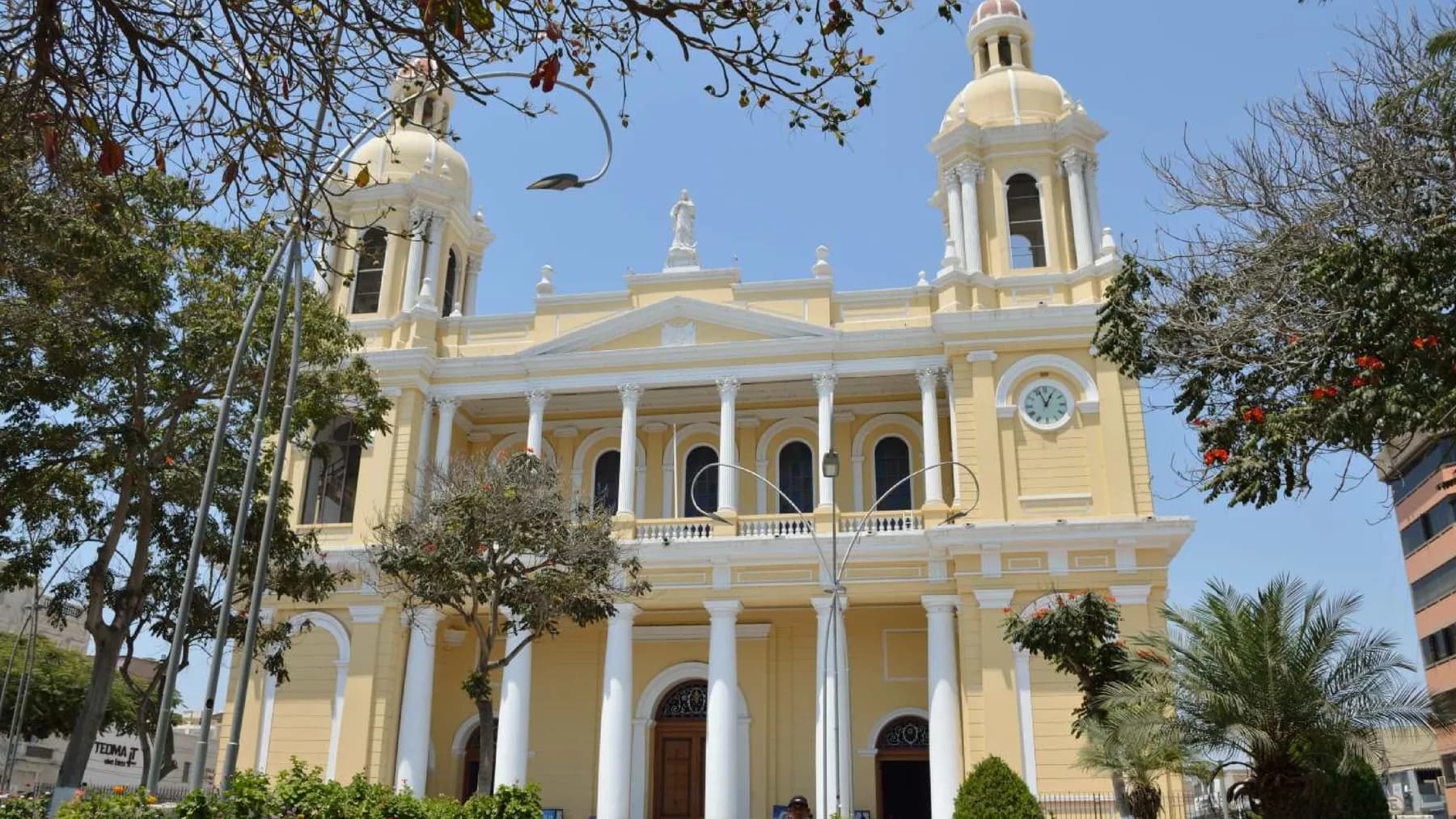
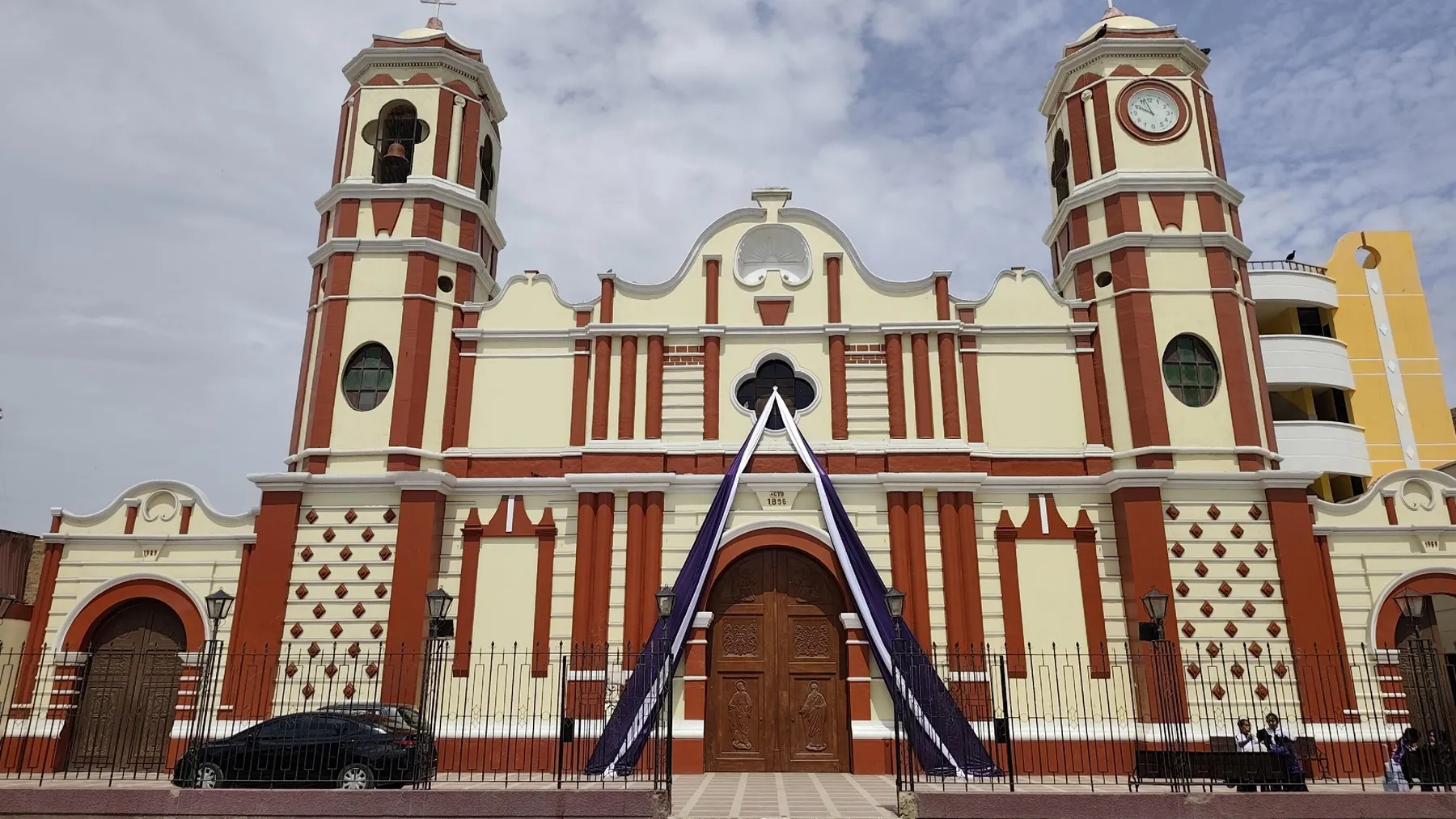
The Cathedral, facing the Plaza de Armas, is the natural starting point of the city circuit.
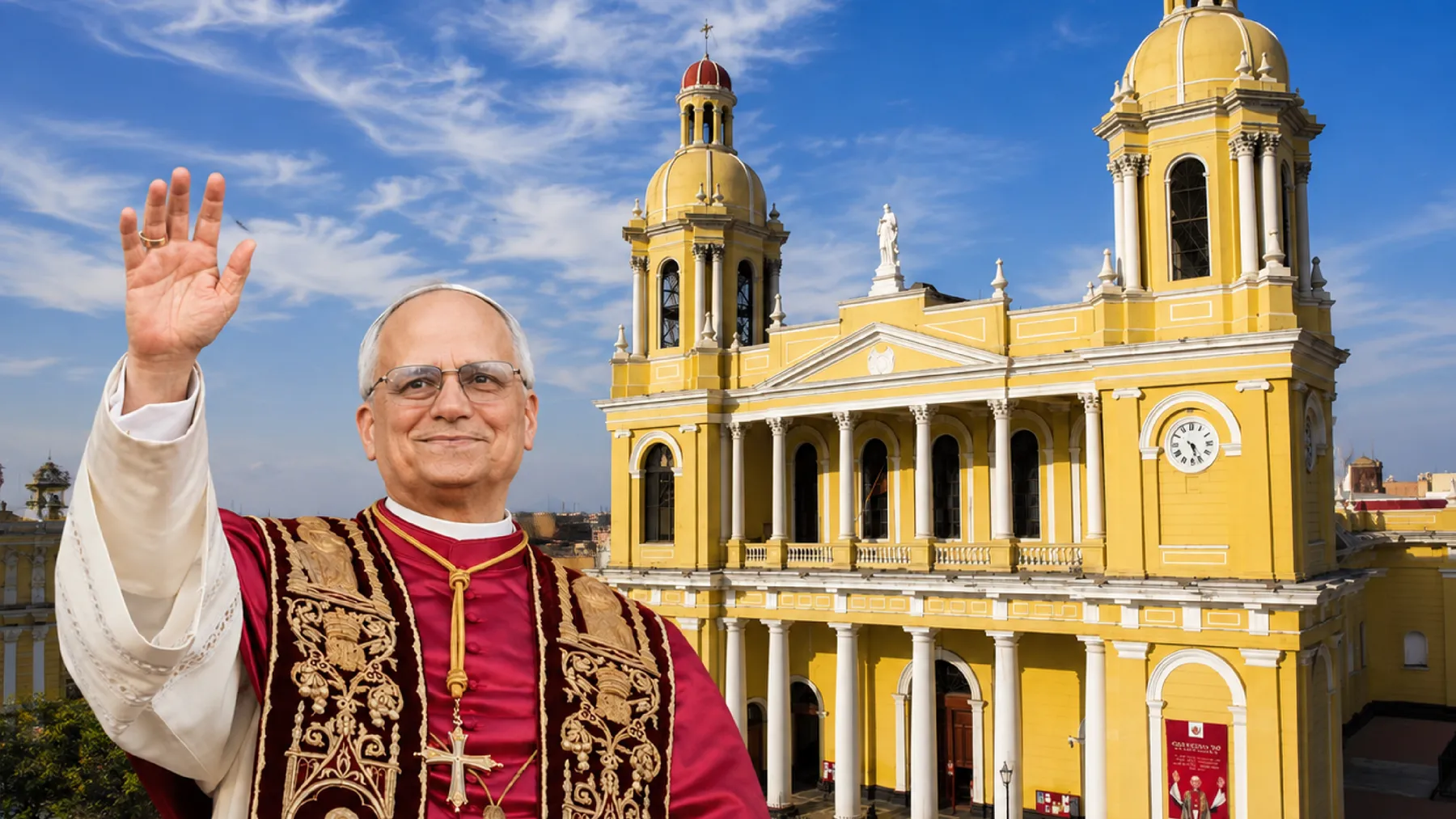
Facing the Plaza de Armas, the Santa María Cathedral is one of Chiclayo's main architectural and religious landmarks. The neoclassical church is one of the route's central points: the Provincial Municipality identifies it as the main stop on the city circuit, practically opposite the main park.
Beyond its architectural value, the Cathedral carries special meaning because of its link to Robert Prevost's pastoral work in Chiclayo.
2. Sanctuary of Our Lady of Peace
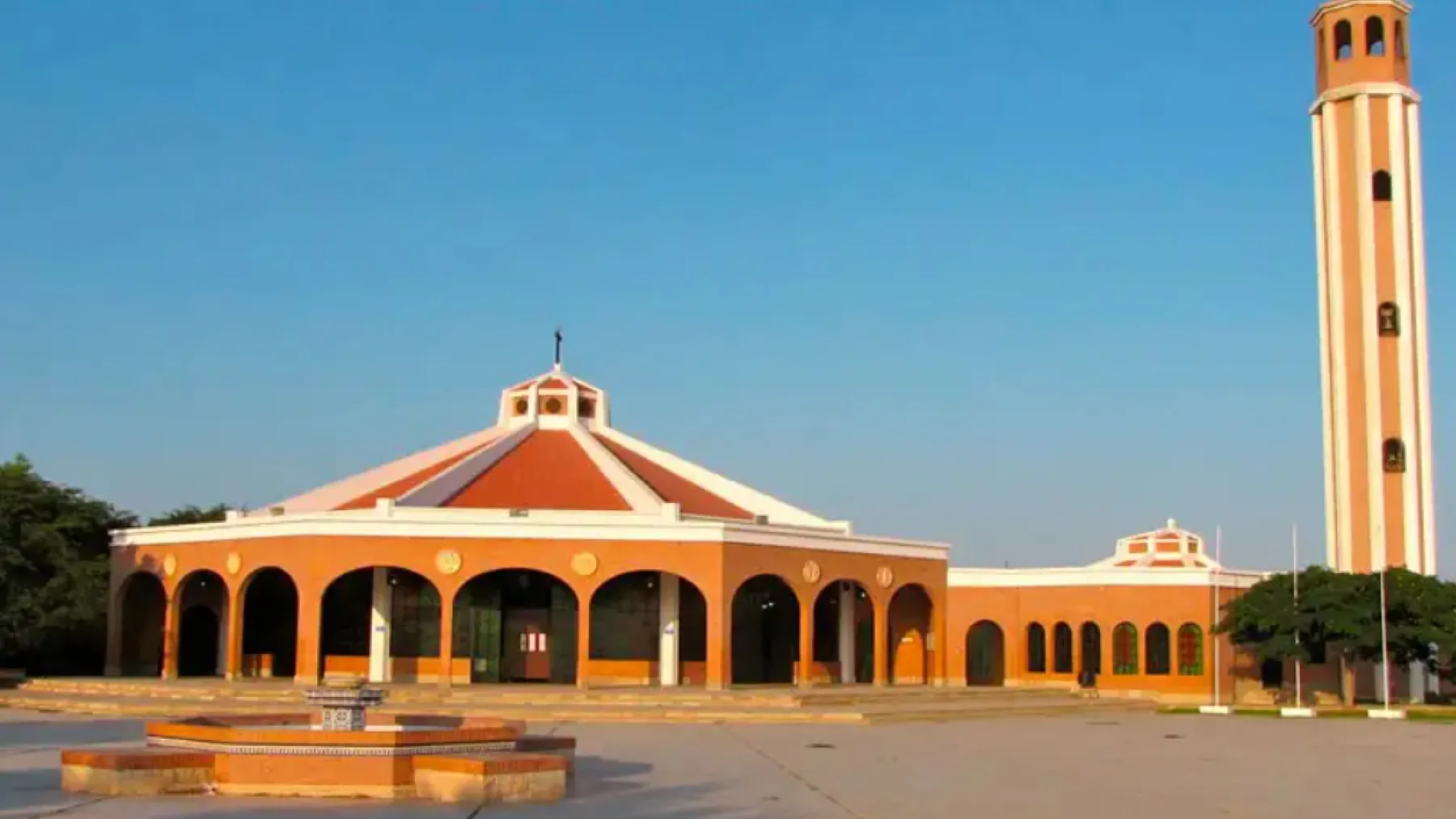
4.7 km from downtown: one of the city's most beloved religious spaces.
A few kilometers from downtown Chiclayo stands the Sanctuary of Our Lady of Peace, one of the city's most important religious sites.
The sanctuary is tied to the pastoral life of the Diocese of Chiclayo and appears both on the official tourist circuits and among the places Pope Leo XIV will visit on his return to Peru. It is an ideal spot to pair sightseeing with a more spiritual experience.
3. San Pedro Church in Monsefú
Monsefú, 13.2 km away: crafts, food and patron-saint festivals.
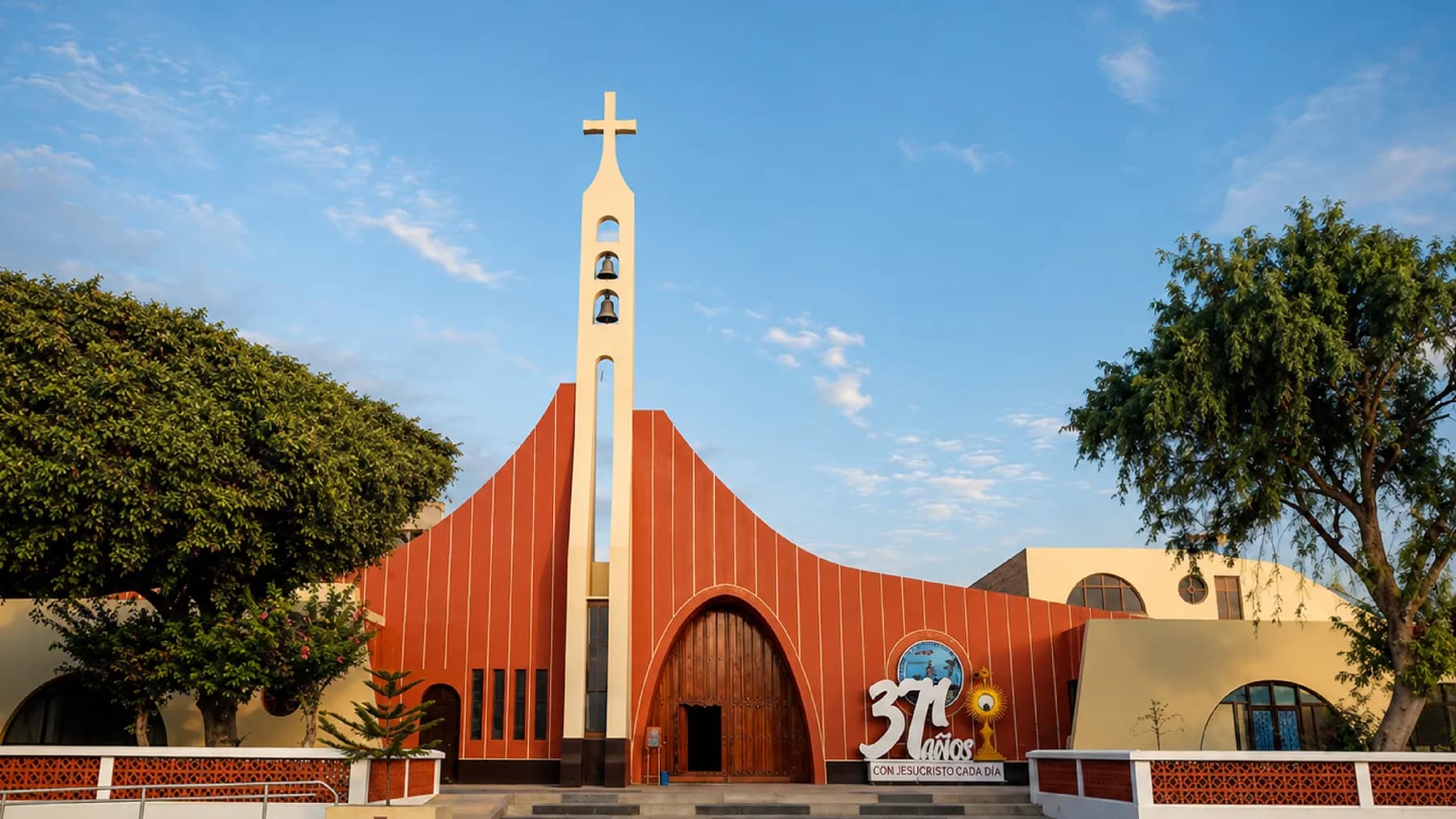
The Pope's Route also reaches beyond Chiclayo. In Monsefú, San Pedro Church is one of the churches on the circuit: it sits on the district's main square and is a key center of local religious and cultural life.
Visiting Monsefú also means seeing one of the most traditional towns in Lambayeque, known for its crafts, cuisine and religious celebrations.
4. Santa María Magdalena Church in Ciudad Eten
Ciudad Eten, 16.5 km from Chiclayo's main park.
Another highlight is the Santa María Magdalena Church in Ciudad Eten. This historic church is part of the route and is tied to the religious tradition of a town known for its cultural and spiritual significance.
If you have time to extend the route, Ciudad Eten is a good way to see a more traditional side of Lambayeque.
5. San Agustín Convent in Zaña
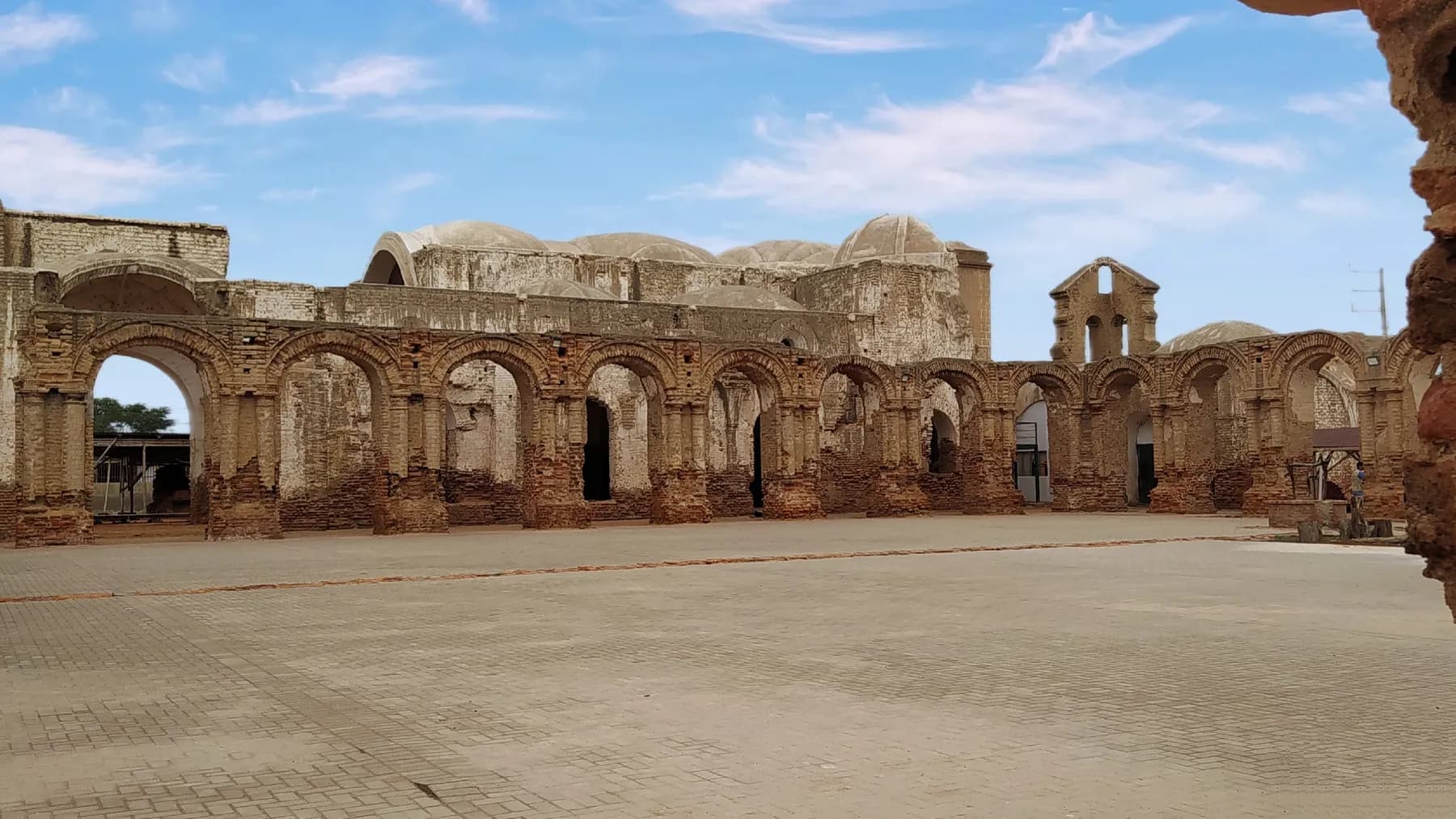
Zaña, 46.6 km away: the longest leg of the route, and the most historic.
A few kilometers from Chiclayo lies Zaña, a town known for its historic heritage. The San Agustín Convent is part of the Pope's Route promoted by the Municipality of Chiclayo, and it lets you combine religious tourism with history and heritage.
If you want a fuller route, set aside part of a day for Zaña and its historic buildings.
How much time do you need for the route?
It depends on how much you want to cover. Half a day or a full day is enough for the main stops inside Chiclayo. If you want to extend toward Monsefú, Ciudad Eten and Zaña, plan on one or two days, depending on your pace.
For reference, these are the distances the Municipality of Chiclayo gives from the main park:
Place
Approx. distance
Chiclayo Cathedral
0.02 km
Sanctuary of Our Lady of Peace
4.7 km
San Pedro Church, Monsefú
13.2 km
Santa María Magdalena Church, Ciudad Eten
16.5 km
San Agustín Convent, Zaña
46.6 km
What else can you see while you are here?
The religious route pairs well with museums, the coast and Lambayeque cooking.
One advantage of the Pope's Route is that you can combine it with other Lambayeque attractions. For example:
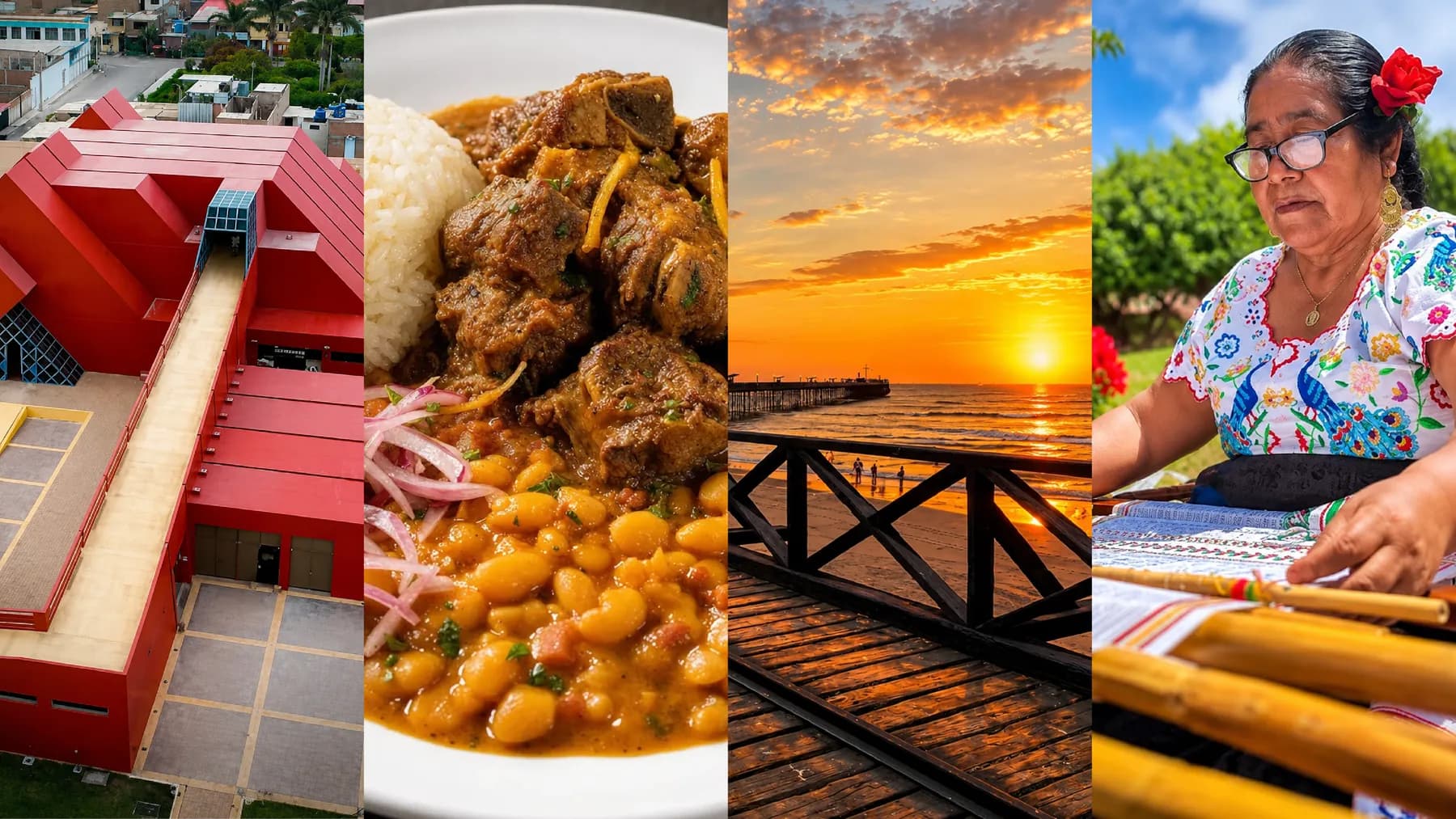
·Archaeological museums: Royal Tombs of Sipán and the Sicán National Museum.
·Pimentel beach, with its pier and boardwalk.
·Santa Rosa beach and its fishing cove.
·Chiclayo's historic center and the Mercado Modelo.
·Traditional Lambayeque food: arroz con pato, causa ferreñafana, king kong.
·Monsefú crafts: straw weaving and native cotton textiles.
In fact, the official proposal for the Pope's Route is designed precisely to connect the religious dimension with cultural heritage and regional identity.
Tips for following the Pope's Route
1Plan the route ahead. Some stops are inside Chiclayo and others require traveling to nearby districts. Group them by area.
2Wear comfortable clothes. If you visit several churches in one day you will walk a lot and move between stops under northern sun.
3Respect the religious spaces. Many of these places are still working churches and active places of worship.
4Make time for the local food. A route through Lambayeque is not complete without sitting down to the region's traditional dishes.
5Check current information. Opening hours, services and special events can change, especially around the dates of the papal visit.
Where to stay for the Pope's Route
If you are planning to follow the Pope's Route, Chiclayo is the best base. Staying in the city puts you within easy reach of the main stops, with the region's food, culture and other attractions on the side.
At Zentra Hotel & Cowork you will find several places to stay in Chiclayo, designed for travelers who want comfort and a practical location. From any of our locations you can plan your trips and come back to rest after a full day exploring Lambayeque.

 Chiclayo